
More than just plan sets.
We evaluate site conditions, including roof space, shading, and structural considerations, to ensure optimal system placement and performance.
Our detailed assessments determine project viability, identifying challenges and fixes before you start.
Using advanced modeling tools, we create precise designs that maximize energy production while adhering to local regulations and safety standards.
We provide stamped and sealed engineering documents to help you meet permitting requirements with ease.
What is in the plan set.
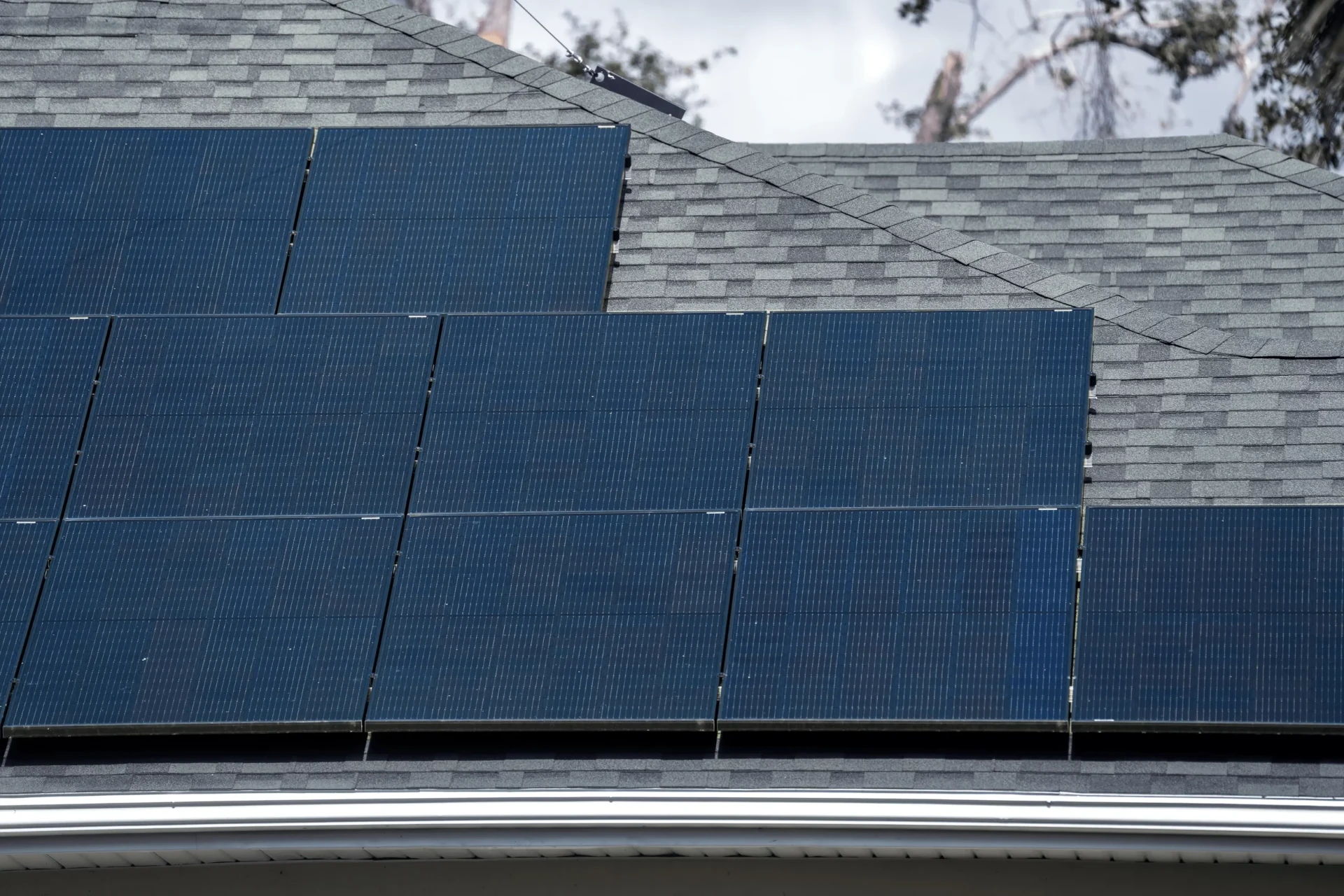
A PV permit set answers every question a plan reviewer and the utility will ask. Ours is built to be read quickly and followed by a crew.
Array location, setbacks, access pathways and module layout on the roof or ground mount.
The electrical path from modules to the point of connection, with overcurrent protection, disconnects and conductors specified.
String sizing against inverter limits, plus conductor sizing and voltage drop checks.
Mounting, flashing and fastener details with the load path to the framing, checked for wind uplift.
Data sheets and ratings for modules, inverters, racking and any battery or monitoring equipment.
Required placards and any jurisdiction-specific pages the building department asks for.
Who this is for.
High-volume rooftop systems that need a clean, repeatable permit set for each address.
Larger rooftop, canopy and ground-mount systems with more complex structural and electrical design.
Firms new to solar that need the engineering side handled correctly from the first job.
Projects that need PV designed alongside structure, storage and procurement. See our commercial EPC service.
Why choose SunSmart Engineering?
We prioritize efficiency and cost-effectiveness to deliver systems that balance performance and budget.
Every design is tailored to your project's unique specifications, whether residential, commercial, or industrial.
All designs meet NEC standards, local building codes, and safety requirements for worry-free permitting.
While our primary focus is on design, we can offer guidance and recommendations to help ensure system success post-installation.
How it works.
Most of the work on your side is sending complete site information at the start.
Address, utility usage or target size, roof or ground-mount details, photos, and the modules, inverters and racking you plan to use.
We set the code edition, wind speed, exposure and utility requirements for the address, and tell you what else we need.
We lay out the array, size the strings and conductors, check the structure and prepare the drawings.
You receive the stamped plan set, ready to submit with the permit application.
If the building department or utility has comments on our sheets, we answer them.
Codes and approvals involved.
Plan reviewers check PV drawings against the code edition in force where the permit is filed.
Article 690 covers solar PV systems. Article 705 covers interconnected power sources. Rooftop PV on buildings needs a rapid shutdown system under NEC 690.12.
The 8th Edition (2023), with the 2020 NEC, applies through December 30, 2026. The 9th Edition (2026), with the 2023 NEC, is scheduled to take effect December 31, 2026. Florida does not enforce the 2026 NEC.
Design wind pressures set the attachment spacing and fastener requirements. The HVHZ (Miami-Dade and Broward) has stricter wind and roofing provisions and requires NOA product approvals for many products.
Rule 25-6.065 has not changed since 2008, and full-retail net metering continues. The gross power rating must not exceed 90% of the customer's utility distribution service rating.
The building department and the utility each have their own requirements. We build the set to what they ask for and answer their comments.
Problems we solve or prevent.
Many building departments want proof that the roof framing can carry the array. We include the attachment details and, where needed, a sealed structural letter.
Rooftop PV needs a clear rapid shutdown design on the drawings. We show the method and the equipment that meets it.
Interconnection limits on the main panel stop jobs late. We check the busbar and service options before the plan set is final.
In Florida, system size is limited against the customer's service rating. We check it at design, not at interconnection.
A full sealed permit set: site plan, roof plan, single-line diagram, three-line diagram, string layouts, structural attachment details, equipment specs, and any AHJ-specific inserts required to hit approval on the first review.
Timing depends on the project and the site information you send; we confirm it when we scope the job. Commercial and utility-scale timelines are scoped up front based on system size and complexity.
We stamp and seal nationwide and in the Caribbean. We maintain a licensed engineer for every jurisdiction we deliver into.
We deliver the engineered plan set and single-line drawings that interconnection applications require. We can coordinate directly with your utility contact when needed.
Yes. We regularly pick up projects mid-stream, review the existing scope, and re-engineer the plan set so it clears the AHJ without further revision cycles.
Send the site address, the customer's usage or the target system size, the roof or ground-mount details, and the equipment you plan to use. Add photos, a roof plan or a prior plan set if you have them. We will confirm the scope and ask for anything missing.
In Florida, the 2020 NEC applies under the Florida Building Code, 8th Edition through December 30, 2026. The 2023 NEC applies under the 9th Edition, scheduled to take effect December 31, 2026. Florida does not enforce the 2026 NEC. Elsewhere, we design to the NEC and building code your jurisdiction has adopted.
They can set deadlines. The homeowner §25D credit does not apply to expenditures after December 31, 2025. For business-owned systems under §48E, the window to start construction closed on July 4, 2026, and a solar project that starts construction after that date must be placed in service by December 31, 2027. Confirm your project's status with a tax advisor.
Send us your next PV project.
We understand the importance of dependable, accurate designs in driving the success of your solar projects. Our team works closely with you to ensure every detail of your PV system is covered.

PV design guides.
Our guides cover sizing, equipment and code compliance in more depth, written for solar contractors.
Guides & insights
Related articles
- How Do You Choose Solar Panels and Inverters for a Project?Solar PV Design
- How Do Net Metering and Utility Interconnection Work?Solar Incentives & Economics
- How Do You Meet NEC and Permit Requirements for Solar PV?Codes, Permits & Safety
- How Much Does Solar Cost, and How Long Is the Payback?Solar Incentives & Economics
- How Long Does a Solar Project Take, and Who Services It Afterward?Solar PV Design
- How Do You Size a Solar System and Estimate Its Production?Solar PV Design