

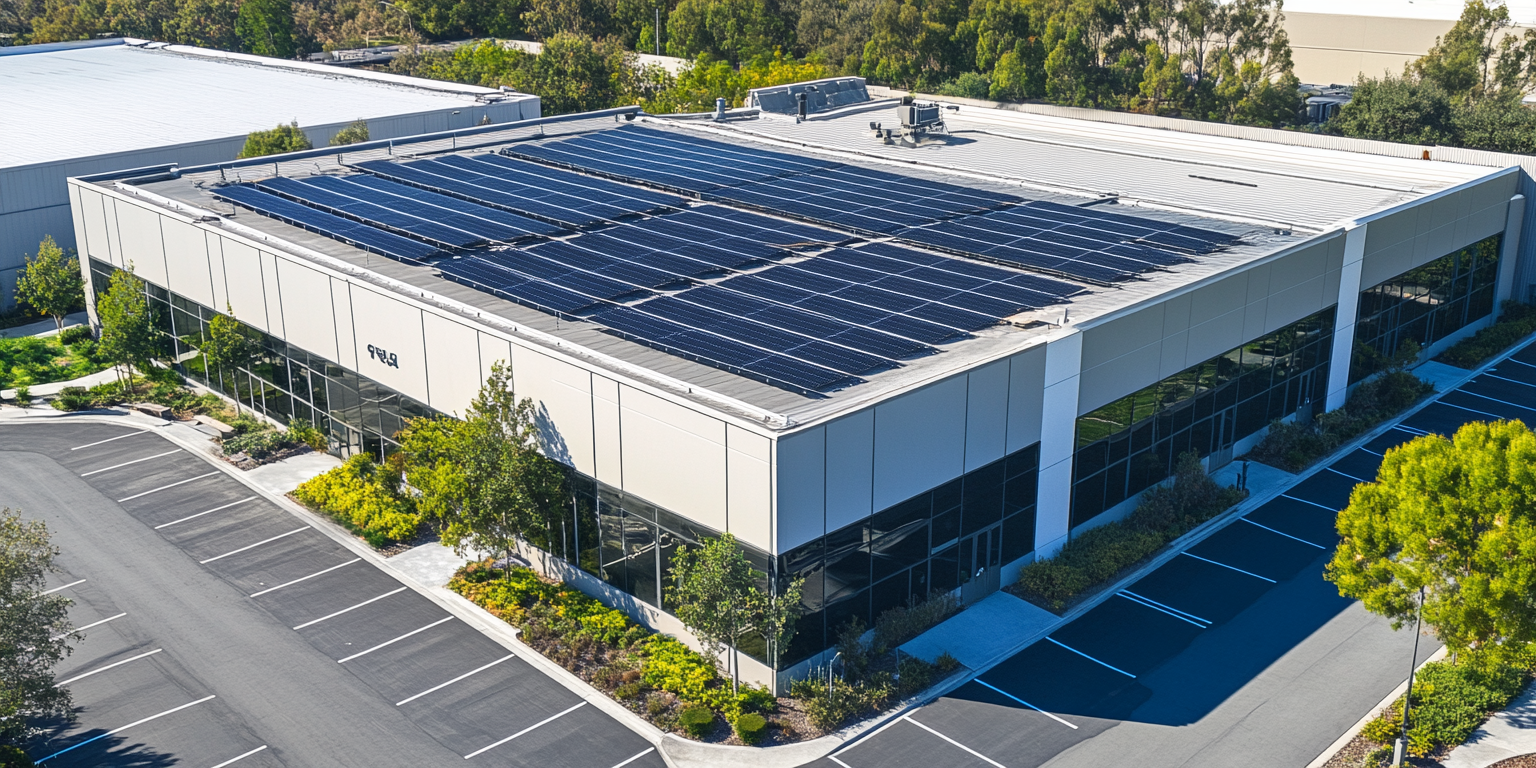
The on-site install takes one to three days for a typical residential system and one to several weeks for a commercial one, but the calendar is set by design, permit review, equipment lead time, inspection and utility approval, which usually add up to far more than the install. After handoff, the installer answers for workmanship, the manufacturer answers for equipment defects, and the owner or an O&M contractor handles routine upkeep. The contract and the warranty documents decide where those lines fall, so they have to be written before the first panel goes up.
Key takeaways
- Install labor is the shortest phase: typically 1 to 3 days for a residential system and one to several weeks for a commercial one.
- Permit review ranges from same-day to several weeks, and NREL's SolarAPP+ pilot cut review to under one day and shortened adoption timelines by about 12 days on average for eligible residential systems.
- The system cannot operate until the utility grants permission, and larger commercial systems may need an interconnection study that adds months.
- On commercial projects, federal credit deadlines now drive the schedule: construction that began after July 4, 2026 must be placed in service by December 31, 2027.
- Installer workmanship warranties are often much shorter than equipment warranties, and manufacturer warranties commonly exclude the labor to replace a failed part.
- A written handoff package, with as-builts, listings, warranty registrations and monitoring access, prevents most post-install disputes.
How long does a residential or commercial solar project take?
From signed contract to permission to operate, plan on weeks for a residential system and several months for a commercial one, with most of that time spent waiting on approvals and equipment rather than working on the roof. The phases below are the ones that set the calendar.
| Phase | Residential | Commercial |
|---|---|---|
| Site assessment and data collection | Days | Days to weeks, including utility bills, one-line and structural data |
| Design and engineering | Scoped by site information and project complexity; see our PV design page | Scoped by system size and complexity |
| Permit review | Same day with automated permitting where adopted, otherwise days to weeks | Weeks, longer with plan review comments |
| Equipment procurement | Often weeks, depending on supply and brand | Weeks to months for large orders |
| On-site installation | 1 to 3 days for a typical system | One week to several weeks |
| Inspection | Days to about two weeks, depending on AHJ backlog | Same, plus any commissioning tests |
| Utility approval to operate | Days to several weeks | Weeks, and months if a study is required |
Treat these as ranges, not promises. The two numbers you control are the quality of the plan set and how early you submit utility paperwork. A plan set that matches the AHJ's checklist avoids a comment cycle, and an interconnection application filed alongside the permit avoids a second wait. For what a complete plan set needs, see the NEC and permit guide.
Automated permitting shortens one step. NREL's SolarAPP+ pilot, run from November 2020 through December 2021 with five AHJs and 16 contractors, reduced permit review times to less than one day and cut adoption timelines by 12 days on average. It applies to eligible residential systems in jurisdictions that have adopted it, so it will not cover every job.
What slows a solar project down?
The usual delays are permit comments, a structural question on an older roof, a utility queue, equipment substitutions, a failed inspection or a panel upgrade nobody priced. Weather and seasonal demand add some, but most schedule slips come from paperwork that was incomplete at submission.
The recurring causes:
- Plan review comments. Missing labels, an unclear array boundary, or an attachment detail that does not match the racking manual send the plans back. Each round can cost days or weeks.
- Structural surprises. Framing that does not meet the load or attachment spacing, found after the permit is filed, forces a redesign. See solar on existing roofs.
- Electrical service. The busbar rule can require a panel upgrade or a supply-side tap. Find this at the site visit.
- Utility timing. Interconnection queues vary by utility. Do not energize before the utility approves operation.
- Equipment changes. Substituting a module or inverter after permitting can trigger a plan revision and a new review.
- Failed inspection. A missed label or conductor routing fix costs a reinspection slot.
The commercial version of this list is longer, and hidden problems that blow up your project schedule covers the ones that appear late. For rules that cap system size on commercial service, see the transformer rule that can shrink your system.
Do federal credit deadlines change commercial schedules?
Yes, and they now matter more than any permitting estimate. The rules differ by when construction began.
- Construction began on or before July 4, 2026: there is no placed-in-service deadline, and the 4-year continuity safe harbor applies.
- Construction began after July 4, 2026: the facility must be placed in service by December 31, 2027. Section 48E states the placed-in-service cutoff for solar at December 31, 2027. The window for starting construction closed on July 4, 2026.
- How construction start is shown: Notice 2025-42 limited most projects starting on or after September 2, 2025 to the Physical Work Test, but a federal court vacated that notice on June 6, 2026, which restored the 5% safe harbor for now. The ruling could still be reversed on appeal, so have the owner's tax advisor document how construction start is proven.
- Energy storage: it is not subject to the 2027 cutoff and follows the general phase-out by construction-start year.
For a project that already qualifies, the schedule job is to keep it continuous and finish within the deadline. The tax guides cover the credit rules in depth: start with solar tax credits in 2026, the 2027 solar deadline clock explained and what beginning construction really means.
The §25D homeowner credit ended for expenditures after December 31, 2025, so homeowner-owned residential systems no longer have a federal credit deadline to schedule around. Third-party-owned systems are in the §48E category above.
What makes large commercial systems harder to design than residential ones?
Commercial systems add load analysis, three-phase interconnection, utility studies, flat-roof structure and more stakeholders, and each adds time and review. The physics is the same as residential. The coordination is not.
| Topic | Residential | Commercial |
|---|---|---|
| Load | Mostly household patterns | Business hours, demand charges, process loads |
| Interconnection | Usually single-phase at the main panel | Three-phase service, transformer capacity, possible utility study |
| Structure | Pitched roof, rafters | Flat or low-slope roofs, ballasted or attached, membrane and roof warranty concerns |
| Wind and code | Standard checks | Larger arrays, ballast and wind design on low-slope roofs, fire access, rapid shutdown at scale |
| Stakeholders | Homeowner, installer, AHJ, utility | Owner, developer, GC, EPC, engineer, lender, AHJ, utility |
| Equipment | Many options | Standardized products for supply and service, bulk procurement |
| Schedule risk | Permit and utility | Credit deadlines, interconnection studies, long-lead equipment |
| Operations | Monitoring | O&M contract, performance guarantees, availability terms |
Two points deserve a closer look. First, commercial rooftops carry roof warranties, and NREL's O&M report notes that roofing contractors often guarantee workmanship for 5 to 10 years, and that an overburden waiver, often required to maintain a roof warranty, commits the owner to removing the PV system when roof work is needed. That cost is high, so it belongs in the contract. Second, some customers need backup power or resilience, which brings in storage and a different design. See the battery storage design guide.
For commercial projects that need engineering, procurement and construction under one scope, our commercial solar EPC page describes how that works.
Who is responsible for maintenance after installation: the installer or the manufacturer?
Both, for different things. The installer answers for workmanship and roof penetrations, the manufacturer for defects in its equipment, the roofer for the roof, and the owner or an O&M provider for routine upkeep. None of them owes the others' scope, so the contract must say who the customer calls first.
| Problem | First call | Document that governs |
|---|---|---|
| Roof leak at a penetration | Installer, and the roofer if the roof is under warranty | Workmanship warranty, roof warranty |
| Failed module or inverter | Installer or the manufacturer's claims process | Equipment warranty |
| Underperforming system | Installer or O&M provider | Performance guarantee, monitoring data |
| Routine cleaning, inspection | Owner or O&M contract | Owner's manual, O&M agreement |
| Installer is out of business | Manufacturer, if the warranty allows direct claims | Equipment warranty, registration paperwork |
NREL's O&M best practices report says an EPC or installer warranty may be as short as 1 to 5 years while equipment warranties run as long as 25 for modules, and that equipment warranties should transfer to the responsible O&M provider at the end of the installer's term. It also notes that warranty replacement of a string inverter can take about a month.
Equipment warranties do not always cover the cost of the visit. The Enphase US limited warranty covers IQ microinverters for 25 years from activation and replaces defective units, but it excludes labor for uninstalling, reinstalling or troubleshooting, and it expects continuous internet connectivity. It also describes a transfer fee and process when ownership changes. Whichever brand you install, read the equivalent clauses and tell the customer who pays for the labor.
Disputes get settled by the paper. Installation that follows the manufacturer's manual and the plan set strengthens a defect claim against the manufacturer. Installation that departs from them weakens it, and the cost can land on the installer. Third-party inspections and verification letters document the installed condition against code and the approved plans.
What should a handoff package include?
A good handoff gives the owner everything needed to operate, claim warranties and sell the property. Assemble it before final payment, and keep a copy in the project file.
- Stamped plan set and as-built drawings, including the single-line diagram and array layout
- Permit, final inspection sign-off and the utility's permission to operate
- Equipment list with model numbers, serial numbers and listings
- Warranty documents and registration confirmations, with claim contacts
- Monitoring login, system identifiers and the alert contact
- Rapid shutdown instructions and the location of the initiation device
- Commissioning data, such as string open-circuit voltages and insulation checks
- A short owner's manual: what to expect for output, how to read the monitor, cleaning guidance, whom to call
- Roof penetration details and the roofer's contact for roof warranty questions
- The production estimate with assumptions, so the owner can compare it to real data
Compare the first year of monitoring data to the estimate, as described in the sizing and production guide. A gap of a few percent is normal. A bigger gap is a service call.
What should customers ask an installer to confirm quality workmanship?
Customers should ask who designs and stamps the plans, who pulls the permit, what warranties cover and who services the system, and then check the answers against paper. For contractors, these are the questions to expect and to answer in writing.
- Licensing and insurance. Is the contractor licensed in the state, and can they show proof of liability and workers' compensation coverage?
- Engineering. Who designed and stamped the plan set, and will the customer receive a copy?
- Permits and inspections. Who pulls them, and who attends the inspection?
- Equipment. Which exact modules, inverters and racking, with listings and warranties?
- Warranties. How long is the workmanship warranty, does it cover roof leaks at penetrations, and what do manufacturer warranties exclude, such as labor?
- Service. Who does the customer call, and what is the response time commitment?
- Production estimate. What tool, what losses and what degradation assumption produced it?
- Schedule and payment. Which milestones trigger payments, and what happens if the utility delays operation?
- Roof work. If the roof will need replacing, who removes and resets the array, and at what cost?
- References. Can the customer see recent comparable jobs and speak to past clients?
Reviews and references help, but written terms matter more. A contractor who answers these clearly before signing will have fewer disputes after.
FAQ
How long does the utility take to approve operation?
It ranges from days to several weeks for a typical residential system, and larger commercial systems can take months if an interconnection study is needed. Ask the utility for its current process when you file, and do not energize before approval.
Can the customer turn the system on after final inspection?
Not without the utility's permission to operate. Passing inspection confirms the installation meets code. Interconnection approval is a separate step, and operating early can violate the interconnection agreement.
Do solar warranties transfer when the house sells?
Often, but with conditions. Some manufacturers charge a transfer fee and require notice, as the Enphase US warranty describes. Check each document and put the transfer steps in the handoff package.
What happens if the installer goes out of business?
Equipment warranties from the manufacturer often continue, but a claim needs the registration and serial numbers, and labor to replace parts becomes the owner's cost. That is why the handoff package should list the equipment and the claim contacts.
Who pays to remove panels when the roof needs replacing?
Usually the owner, unless the contract says otherwise. NREL's O&M report notes the cost of removing and reinstalling an array is high and includes lost production, so address it in the contract and plan roof work before installation.
Bottom line
The install is the shortest part of a solar project. The schedule depends on a complete plan set, early utility paperwork, and, on commercial jobs, the credit deadlines that now decide whether a project qualifies. Afterward, installer, manufacturer, roofer and owner each cover a different part, so write down who does what and hand the customer the documents to prove it.
SunSmart Engineering designs and stamps PV plan sets for contractors in all 50 states.
Keep reading.


Have a project in mind?
Tell us what you're building and we'll help you get it engineered, sealed, and permitted.