

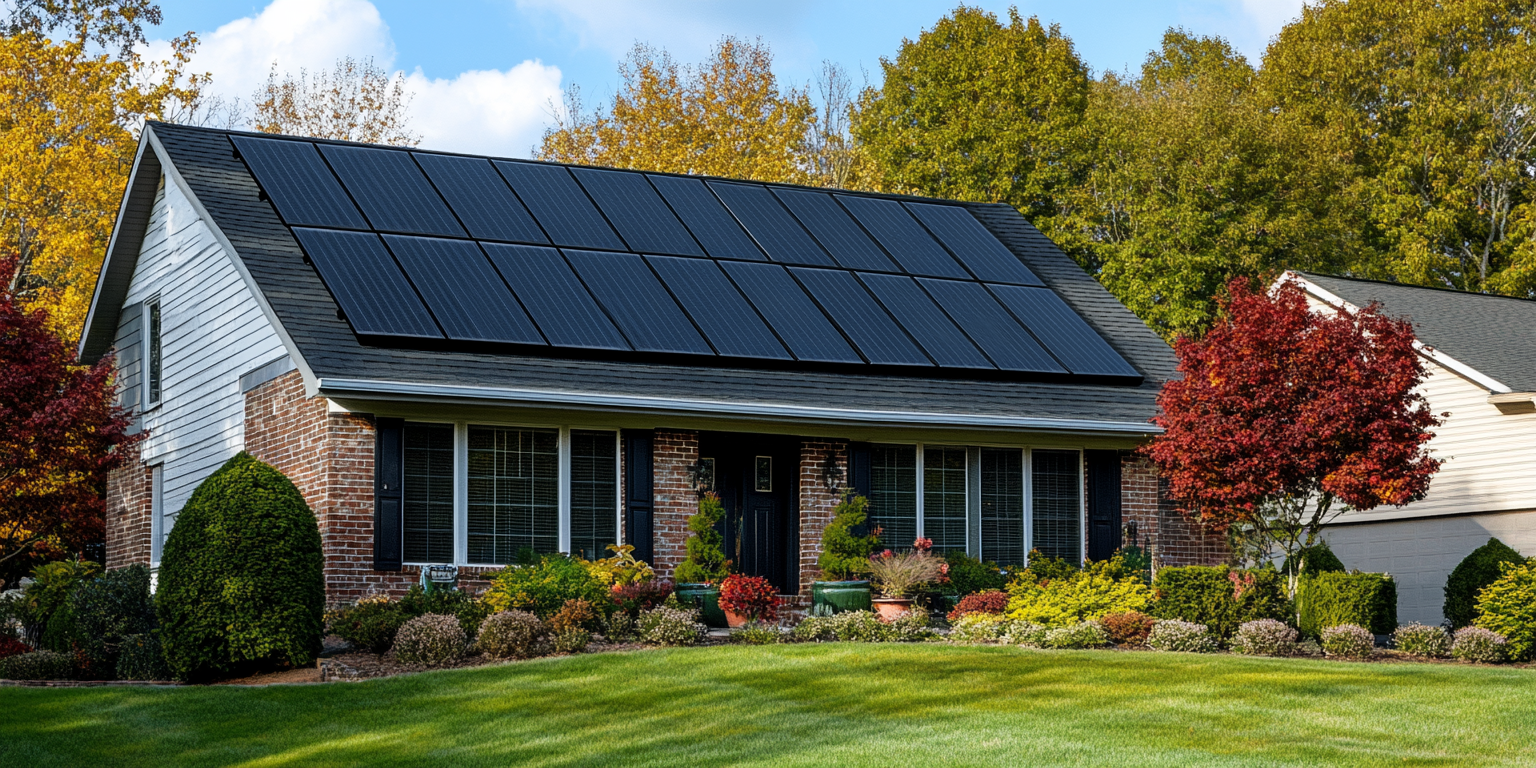
Meeting solar code starts with knowing which NEC edition and which local amendments your authority having jurisdiction (AHJ) enforces, then building the plan set to that edition: rapid shutdown, conductor and overcurrent sizing, voltage drop, grounding, labels and the interconnection rules in Article 705. Permits are issued by the city or county, not the state, and usually mean a building permit, an electrical permit and a separate utility interconnection application. Voltage drop is a design target and not a code limit, so it needs its own line in the calculations.
Key takeaways
- Florida enforces the 2020 NEC under the Florida Building Code, 8th Edition, until December 30, 2026, and the 2023 NEC under the 9th Edition is scheduled to take effect December 31, 2026.
- In the 2020 NEC, rooftop rapid shutdown limits conductors to 80 V inside the array boundary and 30 V outside it, both within 30 seconds.
- PV source circuits are sized at 125% of the module short-circuit current for maximum current, then conductors and overcurrent devices at 125% of that, about 156% of Isc overall.
- Voltage drop is a design target, commonly 1 to 2% on DC and no more than about 3% on a branch circuit, and it needs an explicit calculation on every long run.
- Permit requirements are set locally, and in Miami-Dade and Broward (the High-Velocity Hurricane Zone) stricter wind and roofing rules and product approvals apply.
- OSHA's fall-protection trigger for roofing work is 6 feet, and PV conductors stay energized whenever the modules see light.
Which NEC edition applies, and how do you comply with rapid shutdown?
Design to the edition your AHJ has adopted. In Florida that is the 2020 NEC (adopted by the Florida Building Code, 8th Edition) until December 30, 2026, and the 2023 NEC under the 9th Edition, scheduled to take effect December 31, 2026. The state's own product approval update lists December 31, 2026 as the effective date of the 9th Edition, and Miami-Dade's notice says applications submitted after close of business on December 30, 2026 must comply with the new edition. Florida does not enforce the 2026 NEC. In other states, ask the AHJ which edition and local amendments it applies, because adoption lags and amendments vary.
The NEC rapid shutdown rule is in Section 690.12. Under the 2020 text, as reproduced by Mike Holt Enterprises, PV system conductors on or in a building must be controlled by a rapid shutdown system:
- The array boundary is 1 ft outside the perimeter of the array.
- Conductors outside the array boundary, or more than 3 ft from the point of entry inside a building, must be limited to 30 V within 30 seconds of initiation.
- Inside the array boundary, either a listed PV hazard control system is used, or conductors are limited to 80 V within 30 seconds, or the array has no exposed wiring methods or conductive parts and sits more than 8 ft from exposed conductive parts.
- A rapid shutdown initiation device is required. For one- and two-family dwellings it must be outside the building at a readily accessible location.
- Ground-mounted PV conductors that enter a building whose sole purpose is to house PV equipment are exempt.
- Equipment that performs the rapid shutdown function, other than initiation devices, must be listed for it.
Module-level electronics (microinverters or optimizers) are the usual way to meet the 80 V inside-the-array limit, which is part of why they are common on rooftops. The equipment guide compares the options. Check the section text and numbering in the edition you are designing to before you cite it on a plan set.
In practice, compliance is a checklist inside the plan set, not a late review. Pick equipment listed for the shutdown method, show the array boundary and initiation device location, label per the code, and keep the listing documents with the permit file.
What else does the NEC require on a PV plan set?
A PV plan set should show maximum system voltage, circuit and conductor sizing, overcurrent protection, disconnecting means, wiring methods, grounding, labels and the point of interconnection. The article and section numbers below follow the 2020 NEC, and numbering moves between editions, so confirm each against the edition adopted locally.
| Topic | Where to look | What the plan set should show |
|---|---|---|
| Maximum voltage | 690.7 | Open-circuit voltage corrected for the lowest expected temperature, checked against inverter and equipment limits |
| Circuit sizing and current | 690.8 | Maximum circuit current from module Isc, conductor ampacity with corrections |
| Overcurrent protection | 690.9 | Fuse or breaker ratings for source, output and inverter circuits |
| Rapid shutdown | 690.12 | Array boundary, initiation device, equipment listings |
| Disconnecting means | 690.13 and related | Location and ratings of PV and inverter disconnects |
| Wiring methods | 690.31 | Conductor types, conduit, support, rooftop routing |
| Grounding | 690.41 and following | Equipment grounding, bonding and any grounding electrode connections |
| Labels | 690.56 and related | Power source identification and rapid shutdown labels at service equipment |
| Interconnection | 705.12 | Busbar rating and overcurrent rating at the point of connection, the 120% rule |
The 120% busbar rule often changes a design. If the main breaker plus the PV breaker exceeds 120% of the busbar rating, the options are a supply-side tap, a main breaker downsize, a panel upgrade or a power-control approach the edition allows. Raise it at the site visit, not after plan review. The net metering and interconnection guide covers the utility side.
How do local building codes affect rooftop installations?
Local codes add structural, fire-access, wind, zoning and product-approval requirements on top of the NEC, and they differ by AHJ. Plan on four checks before you quote a roof.
- Structure. The roof framing and attachments must carry the array's dead load and wind uplift under the adopted code. Existing roofs often need an engineer's evaluation. See solar on existing roofs.
- Wind. Design wind speed, exposure category and attachment spacing drive the racking layout. See racking, wind, snow and ground mounts, and for Florida high-wind specifics, mounting commercial solar in Florida's high winds.
- Fire access. Many jurisdictions require setbacks from ridges and edges and walking pathways for firefighters under their adopted fire code, with local variations. Ask for the AHJ's solar checklist before you lay out the array.
- Zoning and approvals. Height limits, historic district review and HOA approvals are separate from the building permit. Some states restrict HOAs from banning solar, but a design review step usually remains.
In Florida, the High-Velocity Hurricane Zone (HVHZ) covers Miami-Dade and Broward. It applies stricter wind rules (Section 1620) and roofing rules (Chapter 15) and requires Notice of Acceptance (NOA) product approvals for roofing and attachment components. Specify NOA-listed products on plans there, and expect more detailed plan review.
California offers a different example. The 2025 Energy Code (Title 24 Part 6) applies to permit applications filed from January 1, 2026, and the state's overview says new single-family homes with electrical service over 125 A must be battery-ready unless a battery is installed. If you work across states, expect the energy code and the electrical code to interact.
What permits does a solar PV system need?
A typical project needs a building permit for the structure and attachments, an electrical permit for the wiring, and a utility interconnection application before the system can operate. Zoning, fire or HOA approvals come on top where they apply. The AHJ issues the permits and inspects; the utility approves interconnection and gives permission to operate.
Permit packages almost always include:
- Site plan and roof plan with array layout, setbacks and pathways
- Single-line diagram, plus a three-line diagram where the AHJ asks for one
- Structural information: attachment details and, where required, a stamped letter or calculation
- Equipment data sheets and listings, including rapid shutdown documentation
- Label schedule and, for larger systems, load calculations
Requirements differ by state because states differ in how they standardize permitting, not because each state has a unique permit type. Counties and cities inside one state also vary, so a template that worked in one county may need changes in the next. Check the AHJ's portal or checklist before you submit.
Online automated permitting can shorten the review. NREL's SolarAPP+ pilot ran from November 2020 through December 2021 with five AHJs and 16 solar contractors, and reduced permit review times to under one day and shortened adoption timelines by about 12 days on average. SolarAPP+ only covers eligible residential systems in jurisdictions that have adopted it, so you still need the full package elsewhere. Timelines from application through utility approval are covered in the project timeline guide.
How do you calculate wire sizing and voltage drop?
Size the conductor for ampacity first, then check voltage drop on the long runs. Ampacity is a code requirement. Voltage drop is a performance target. Every circuit needs both.
Ampacity. NEC 690.8 sets maximum circuit current at 125% of the sum of the module short-circuit currents. Conductors and overcurrent devices are then sized at 125% of that value, which works out to about 156% of Isc overall, as EC&M's explanation of the rule describes (written for an earlier edition, so confirm the text in yours). Then apply ambient temperature and conduit fill corrections, and check the result against the 75 C terminal rating of the equipment. The rule of thumb in the older posts, that 10 AWG copper "carries 30 A," ignores insulation rating, temperature and fill, and should not appear in a calc.
Voltage drop. For copper, drop in volts is 2 × K × I × L ÷ CM, where K is about 12.9 for copper at 75 C, I is the current in amps, L is the one-way length in feet, and CM is the conductor's area in circular mils (10,380 for 10 AWG, 16,510 for 8 AWG). Divide by the circuit voltage for the percentage.
| Example | Calculation | Result |
|---|---|---|
| DC string, 10 AWG, 10.5 A, 350 V, 150 ft one way | 2 × 12.9 × 10.5 × 150 ÷ 10,380 = 3.9 V | 1.1% |
| AC branch, 8 AWG, 32 A, 240 V, 75 ft one way | 2 × 12.9 × 32 × 75 ÷ 16,510 = 3.75 V | 1.6% |
The NEC informational notes in Articles 210 and 215 suggest keeping branch-circuit drop to about 3% and total feeder plus branch to about 5%. They are not mandatory, but inspectors and utilities may ask. Most designers aim for 1 to 2% on DC runs because the losses come straight out of production. If a run exceeds the target, upsize the conductor, shorten the route by moving the inverter or combiner, or raise the string voltage by adding a module to the string where the inverter window allows. The sizing and production guide shows where wiring loss enters the energy estimate.
What safety precautions prevent electrical hazards and falls?
Fall protection is the more likely way to injure someone on a roof job, and electrical hazards are the one that is easiest to get wrong. Plan both before the crew mounts.
Falls. OSHA's construction fall-protection standard, 29 CFR 1926.501, uses a 6-foot trigger height for unprotected sides and edges, residential construction and both low-slope and steep-roof work. In practice:
- Provide guardrails, safety nets or personal fall arrest systems, with anchors installed before anyone steps onto the roof.
- Use proper lifts or scaffolds for material handling, and set up ladders correctly with the top extending above the roofline.
- Hold a pre-job briefing that covers anchor locations, roof access, weather and rescue.
- Stop work in high wind, lightning or wet conditions. Florida afternoons make this a daily decision.
- Keep tools and modules secured. A module is an awkward sail in wind.
Electrical. PV circuits are live whenever light reaches the modules, so de-energizing the AC side does not de-energize the array.
- Lock out and tag the AC sources, and treat all DC conductors as live until the modules are covered or the array is open-circuited.
- Use insulated tools and rated gloves, and follow the employer's arc-flash and shock-hazard procedures.
- Verify rapid shutdown with the initiation device before working near the array, and do not rely on it as proof that the conductors are safe, since the limit inside the array is 80 V.
- Label every disconnect and keep the single-line diagram on the roof or at the equipment.
Keep a one-page job hazard analysis and a signed briefing sheet on site.
FAQ
Do ground-mounted arrays need rapid shutdown?
Under the 2020 text, rapid shutdown applies to PV conductors on or in a building. A ground-mounted array that does not run conductors into a building falls outside it, and there is an exception for buildings whose sole purpose is to house PV equipment. If the conductors enter an occupied building, assume it applies and confirm with the AHJ.
Where must the rapid shutdown initiation device go?
For one- and two-family dwellings, the 2020 NEC requires the initiation device outside the building at a readily accessible location. The device can be the service disconnect, the PV system disconnect or a readily accessible switch that plainly indicates on or off. Confirm the exact options in the adopted edition.
Does every residential roof system need a structural letter?
Not every one, and it depends on the AHJ. Many require an engineer's letter or calculation for existing framing, particularly in high-wind zones, on older roofs, or when attachment spacing exceeds a prescriptive limit. Check the AHJ checklist, and see solar on existing roofs.
What labels does a PV system need?
The NEC requires labels that identify the PV power source and the rapid shutdown system at the equipment, with wording and placement set by the edition adopted. Many AHJs also want a label schedule on the plan set.
Who answers for a failed inspection?
The permit holder, which is normally the installing contractor. A review of the plan set and the finished work before the inspector arrives can catch missing labels, wrong breaker sizes and conductor routing problems.
Bottom line
Start from the adopted NEC edition and the AHJ's checklist, and put rapid shutdown, conductor sizing, voltage drop and labels on the plan set instead of fixing them at inspection. Expect separate building, electrical and interconnection approvals, and plan for stricter review in the HVHZ and check the energy code in California. Treat fall protection and live DC conductors as the first items in the crew briefing.
SunSmart Engineering designs and stamps PV plan sets for contractors in all 50 states, and offers third-party inspections and verification letters.
Keep reading.


Have a project in mind?
Tell us what you're building and we'll help you get it engineered, sealed, and permitted.